
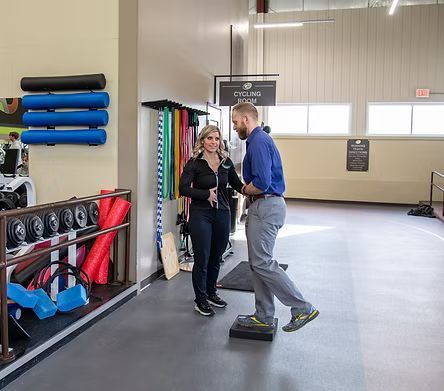
Post Concussion Physical Therapy
Concussions can be debilitating and have long-lasting impacts. At Recharge Physical Therapy & Wellness, the goal is to get you back to living your life or back to playing the game. Our personalized Concussion rehabilitation will provide patients with the resources and a gradual return to activity - you’ll leave our clinic well informed and confident that your health is in good hands. Get in touch and schedule an appointment at your earliest convenience.
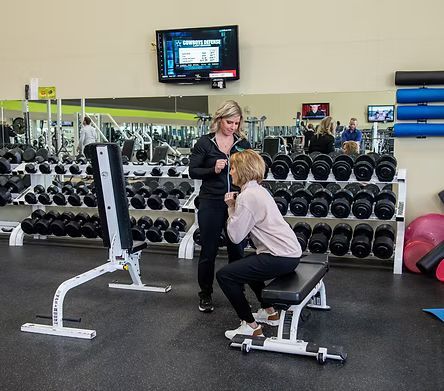
Geriatric Physical Therapy
Among the conditions that may be treated through the use of geriatric physical therapy are Alzheimer's disease, arthritis, osteoporosis, cancer, joint replacement, hip replacement, and more. This form of therapy is used in order to restore mobility, increase fitness levels, reduce pain, and to provide additional benefits.
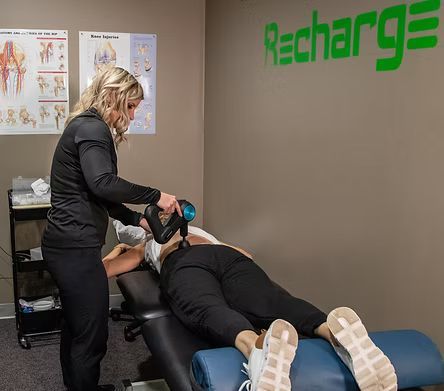
Manual Physical Therapy
Manual therapy techniques are skilled hand movements and skilled passive movements of joints and soft tissue and are intended to improve tissue extensibility; increase range of motion; induce relaxation; mobilize or manipulate soft tissue and joints; modulate pain; and reduce soft tissue swelling, inflammation, or restriction. Techniques may include manual lymphatic drainage, manual traction, massage, mobilization/manipulation, and passive range of motion.

Post Operation Physical Therapy
If you’re looking for quality Post-op Physical Therapy, then Recharge Physical Therapy & Wellness is the physical therapy clinic for you. Our team is here to guide patients and their families every step of the way. Whether it's total knee or hip, rotator cuff repair, ACL repair, among with many others, schedule an appointment to experience firsthand how Recharge's Post-op Physical Therapy can help your health today.
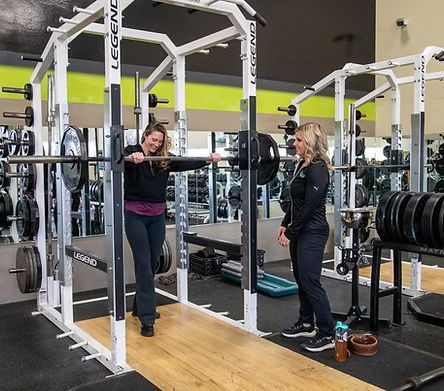
Sports Physical Therapy
From weekend warriors to college athletes to youth athletes. Whatever your sports injury needs are, Recharge Physical Therapy & Wellness can help you get back to the game you love! Whether it's chronic pain, post-surgery rehabilitation, return to play, or acute injuries, Recharge Physical Therapy can help. Call or email to schedule an appointment today!
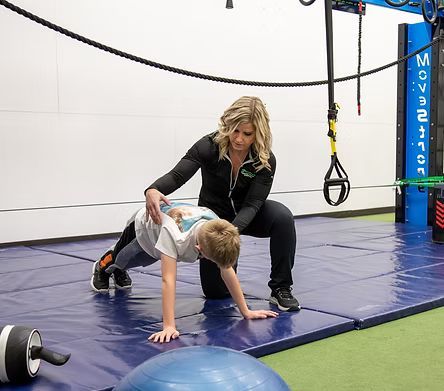
Youth Physical Therapy
Whether it's chronic pain or an acute injury, kids get injured too! Keep them active in sports, gym class, and in the community by getting them back to playing! At Recharge Physical Therapy & Wellness, our doctors are friendly and experienced with children of all ages and will make sure these kids get back to their full potential. Schedule your evaluation for Physical Therapy for Pediatrics today!
Physical Therapy FAQs
What do Physical Therapists do?
Physical therapists are experts in movement and function, so they do not confine their talents only to those that are ill. A large part of a physical therapist's program is directed at preventing injury, loss of movement, and even surgery. Physical therapists work as consultants in industrial settings to improve the design of the workplace and reduce the risk of workers overusing certain muscles or developing lower back pain. They also provide services to athletes of all levels to screen for potential problems and institute preventive exercises programs.
The cornerstones of Physical Therapy treatment is therapeutic exercise and functional training. In addition to "hands-on" care, Physical Therapists also educate patients to take care of themselves and to perform certain exercises on their own. Depending on the particular need of each individual patient, Physical Therapists may also "mobilze" a joint, (perform certain movements at the end of joint range to decrease pain and improve motion) or massage a muscle to improve function and movement. Physical therapists also use modalities including electrical stimulation, hot packs, ice packs, IASTM (istrument assisted soft tissue mobilization).
Most forms of Physical Therapy is covered by insurance, but the coverage will vary for each individual plan.
Is Physical Therapy painful?
For many patients, one of the primary objectives is pain relief. This is frequently accomplished by hands-on techniques, modalities such as E-stim and/or hot/cold therapy. Movement often provides pain relief as well. Your physical therapist will provide you with the appropriate exercises for not only pain relief, but to recover range of motion, strength, and endurance.
In some cases, physical therapy treatment can be painful. For example, recovering knee range of motion following total knee replacement, or shoulder mobility, following shoulder surgery may be painful. Your physical therapist will utilize various techniques to help maximize your treatment goals. It is important that communicate the intensity, frequency, and duration of your pain each visit to your PT. Without this information, it is difficulty to adjust your treatment plans.
Do I need a referral from my doctor?
North Dakota and Minnesota have direct access, which means that you can receive services without a doctor referral. Some restrictions apply:
North Dakota:
- If a physical therapist believes that the care is outside his/her scope of practice, he/she must refer patient to an appropriate healthcare provider. Otherwise, therapists license will be revoked. There are NO other restrictions to access within the state of North Dakota.
Minnesota:
- A physical therapist can treat direct access patients when:
1. Therapy does not continue past 90 days without a referral.
2. A therapist that has more than 1 year experience supervises any therapist licensed for less than 1 year experience.
3. The therapist believes the care is within his/her scope. If a therapist thinks the care is outside of their scope, they must refer patient to an appropriate healthcare provider.
4. Physical therapy is used preventatively in a wellness setting to prevent injury, provide education or conditioning, or promote fitness.
What happens during my first visit?
During your first visit you can expect the following:
* Arrive at your appointment with your paperwork completed ( you can complete it online and submit it prior to your appointment, if applicable- please ask).
*Provide us with your prescription for Physical Therapy (if required).
*We will copy your insurance card.
*You will be seen for the initial evaluation by the Physical Therapist.
* The therapist will discuss the following:
1. Your medical history
2. Your current problems/complaints.
3. Pain intensity; what aggravates and eases the pain.
4. How this is impacting your daily activities or your functional limitations.
5. Your GOALS for physical therapy.
6. Medications, tests, and procedures related to your health.
*The therapist will then perform the objective evaluation which may include all or some of the following:
1. Palpation: Touching around the area of the pain/problem. This is done to check for the presence of pain, tenderness, inflammation, soft tissue integrity, tissue temperature, swelling, etc.
2. Range of Motion (ROM): the therapist will move the joint(s) to check for quality of movement and any restrictions.
3. Muscle Testing: Therapist will check for strength and the quality of muscle contraction. Pain and weakness may be noted and often the muscle strength will be graded (1-5). This is also aprt of the neurological screening.
4. Neurological Screening: the therapist may check to see how the nerves are communicating with the muscles, sensing touch, pain, vibration, or temperature. Reflexes may be assessed as well.
5. Special Tests: the therapist may perform special tests to confirm/rule out the presence of additional problems.
6. Posture Assessment: the positions of joints relative to ideal and each other may be assessed.
**The therapist will then formulate a list of problems you are having, and how to treat those problems. A plan is subsequently established with the patient's input. This includes how many sessions you will be seen each week, how many weeks you will need therapy, home programs, patient education, short term/long term goals, and what is expected after discharge from PT. The plan is created with input from you, your physical therapist, and your doctor.
What do I need to bring with me?
Make sure you bring your physical therapy referral (if needed) and your payment information. If your insurance is covering the cost of your physical therapy, bring your insurance card.
How should I dress?
You should wear loose-fitting clothing so that you can expose the area that will be evaluated and treated. For example, if you have a knee problem, it is best to wear shorts. For a shoulder problem, it is best to wear a tank top, and for low back problems, wear a loose-fitting shirt and pants/shorts, again so we can perform a thorough examination. There are locker rooms/bathrooms available to change in if needed.
What types of treatments will I receive?
There are a lot of different types of treatments that a physical therapist can provide including the following:
1. Exercise
2. Electrical stimulation (NMES, TENS, Russian, Pre-mod)
3. Range of Motion exercises (Passive, Active Assisted and Active)
4. Traction
5. Joint Mobilization
6. Soft tissue Mobilization
7. Progressive Resistive Exercise (PRE)
8. Proprioceptive Neuromuscular Facilitation (PNF)
9. Massage
10. Heat
11. Ice (Cryotherapy)
12. Kinesiology Taping
13. Gait training
14. Functional Screening/Injury Risk Assessment
15. Isometrics
16. Instrument Assisted Soft Tissue Mobilization (IASTM)
Why pay cash for Physical Therapy?
Every year more and more patients are paying cash out of their own pockets for physical therapy services. Like most health care providers, Recharge bills insurance companies as a service of convenience for our patients. In recent years, deductibles have climbed to $5000 or more, copays have become higher, and scrutiny by insurance companies over what is covered has increased. Many patients can actually have lower out-of-pocket expenses if they simply pay for our services without going through their insurance carrier.
Government regulators allow us to provide discounts if sessions are paid for by the patient on the day of service, with further discounts if they pay for multiple sessions. We can afford to offer these discounts because we significantly reduce our administrative expense if we are not billing your insurance company and then waiting for 30-90 days or more to get paid (unfortunately that is not unusual). As the patient you have less cost, however your payment to us does not apply to your deductible. If you have a flex spending account or health savings account, your payments to us may be reimbursed.
Is physical therapy at Recharge Physical Therapy different then other outpatient clinics?
Recharge has set up a practice style that is more effective in a shorter amount of time to get you well and over your injury and get you back to life. At Recharge, patients are scheduled for one hour one-on-one with the same physical therapist each visit (occasionally 30 minute sessions are possible). Most treatments are done with a hands-on approach (manual therapy) with use of specific prescriptive exercises. Questions are encouraged and each treatment session is individualized and specific to each patients needs.
Some (not all) clinics “in your network” will schedule multiple patients at the same time, see patients for 5-15 minutes each with more time spent hooked up to machines or doing exercises that could be done at home. They also may have you see different therapists each visit to accommodate a staff that is part-time, inexperienced, or overbooked to produce more volume. These are all measures that allow clinics to see more patients in less time and produce more revenue to account for the lower rate of reimbursement per visit that they accept by being “in your network”. Know that this is not always the case. You may be able to have good, consistent therapy from a clinic that is in your network. Arm yourself with the ability to recognize what is and what is not good practice. Ultimately the value of your care and getting better will be more important to you than the cost. If you have further questions, or you wish to schedule an appointment at recharge, email tarajaeger@rechargephyscialtherapy.com or call Dr. Tara Jaeger (701-922-9288).
Is my Physical Therapist licensed?
Tara Jaeger has a Doctorate of Physical Therapy and is licensed to practice in Minnesota and North Dakota.
How many visits will I need?
This is HIGHLY variable and is determined by each individual's needs. You may need 1 visit or months of care. It depends on your diagnosis, the severity of your impairments, your past medical history, etc. You will be re-evaluated on a monthly basis and when you see your doctor. We will provide you with a progress report on our recommendations.
Why choose Physical Therapy?
More than half of all Americans suffer from some type of pain. Whether it is a recent episode or chronic, pain can really impact someone's quality of life. However, many Americans do not even know that Physical Therapists are well equipped to not only treat pain but also its source.
Physical Therapists are experts at treating movement and neuro-musculoskeletal disorders. Pain often accompanies a movement disorder, and Physical Therapists can help correct the disorder and relieve the pain.
How long does each treatment session take?
Treatment sessions typically last 30-60 minutes. Initial evaluation will last approximately 60 minutes.